26.7.10

Journey from Esfahan to Shiraz

We decided to take the scenic route through the Zagros Mountains between Esfahan and Shiraz. We used taxis to do this. It was the only way to really get to see the mountains. I really wanted to do this because I've seen satellite photos of these amazing mountains in textbooks and always wanted to see the real thing.

The Zagros Mountains are a great example of a young fold and thrust belt. Collision between the Arabian continent and Eurasia since Miocene time (23 million years ago) has caused the rock layers to become folded into beautiful large-scale round cylindrical folds. The landscape reflects the structure of the rocks: individual folds form long mountains separated by flat valleys.

Paddy fields in a valley in the Zagros.

Quick snappy photos from the car. Look at the sedimentary layers. They look all contorted but its just the way they are being eroded; the way they are intersected by the bumpy eroded surface of the mountain. It looks a bit like a worn bit of old driftwood.

Zagros scene with olive groves. Fold-mountain in the background with nearly vertical layers at the edge and horizontal on the top.

Looking along the side of one giant fold. :-) Great structural geology.


Mmm! Anticlines.

The taxi driver ripped us off though. He was mean. We eventually got to Shiraz, tired, and found a hotel fairly easily. We went for a bit of a wander to get a bite to eat and a couple of rather camp young men called Kevin and Benjamin befriended us. They took us to a fancy ice cream and coffee shop and bought us some delicious ice creams. We wandered up to the castle and sat around chatting for a bit. Kevin was so excited to meet us and begged us to meet him again the next day. He was very persuasive. We agreed. Although we just wanted to see Persepolis.

25.7.10

Esfahan day 2

The next morning after having breakfast in our hotel room we went out for a walk along the river to look at the old bridges on the river Zayandeh. There are 11 old bridges dating from Safavid times (1500s-1700s). They are weirs and bridges and have two levels. Inside there have always been teahouses and they have been famous as a place where people would hang-out and you might get to hear people singing or reciting Persian poetry or legends. Not long before we arrived the teahouses in the bridges had been shut down because people were smoking too much. Some people told us that they thought that it was really because the authorities didn't want young unmarried men and women to be meeting up.

Empty tables by the bridge.

The Si-o Seh Bridge.

People stop us as we pass by to chat and take photos of each other posing with us.

Inside the lower level of the Khaju Bridge. No tea being served and no tables but people are still chilling out anyway. Some men were singing too.

The Khaju Bridge.

Hannah.

Ruth and Hannah walking up the street. After we seen the bridges we went to get our laundry back. They tried to charge us £90! It turned out to be a dry cleaners and they had dry-cleaned all our underwear and everything! Our clothes weren't even worth that much money. With the help of staff from our hotel we managed to get the cost down to $30 in the end but we weren't happy. Always agree a price before getting a service!
Having spent too much on laundry we went to splash-out on some fancy lunch. Right across the street from our hotel I found the same restaurant I remember going to in 1997!

Ruth and Hannah in the fancy restaurant. We had an Esfahani speciality - delicious Fesenjan Chicken - chicken in a rich walnut and pomegranate sauce.

After changing some dollars into Rials we went to look at one of the big famous mosques. The Jameh Mosque. It is the biggest mosque in Iran. Different parts of the mosque date from different periods of history and reflect different architectural styles such as Seljuk, Mongol and Safavid. Unfortunately much of it seemed to be closed off. I think they were getting ready for some special religious occasion.

In one of the great Iwans.


Looking up at the ceiling of a porchway.

We left the mosque and wandered back through kilometres of covered bazar. Alot of motorbikes were roasting about in there noisily and dangerously.


This stall was amazing. It was a treasure trove of weird and wonderful antique and junk stuff.

As night fell we hung out in Imam Square. The lively Iranian holiday vibe there is unique.

Chillin' by the side of the fountain.

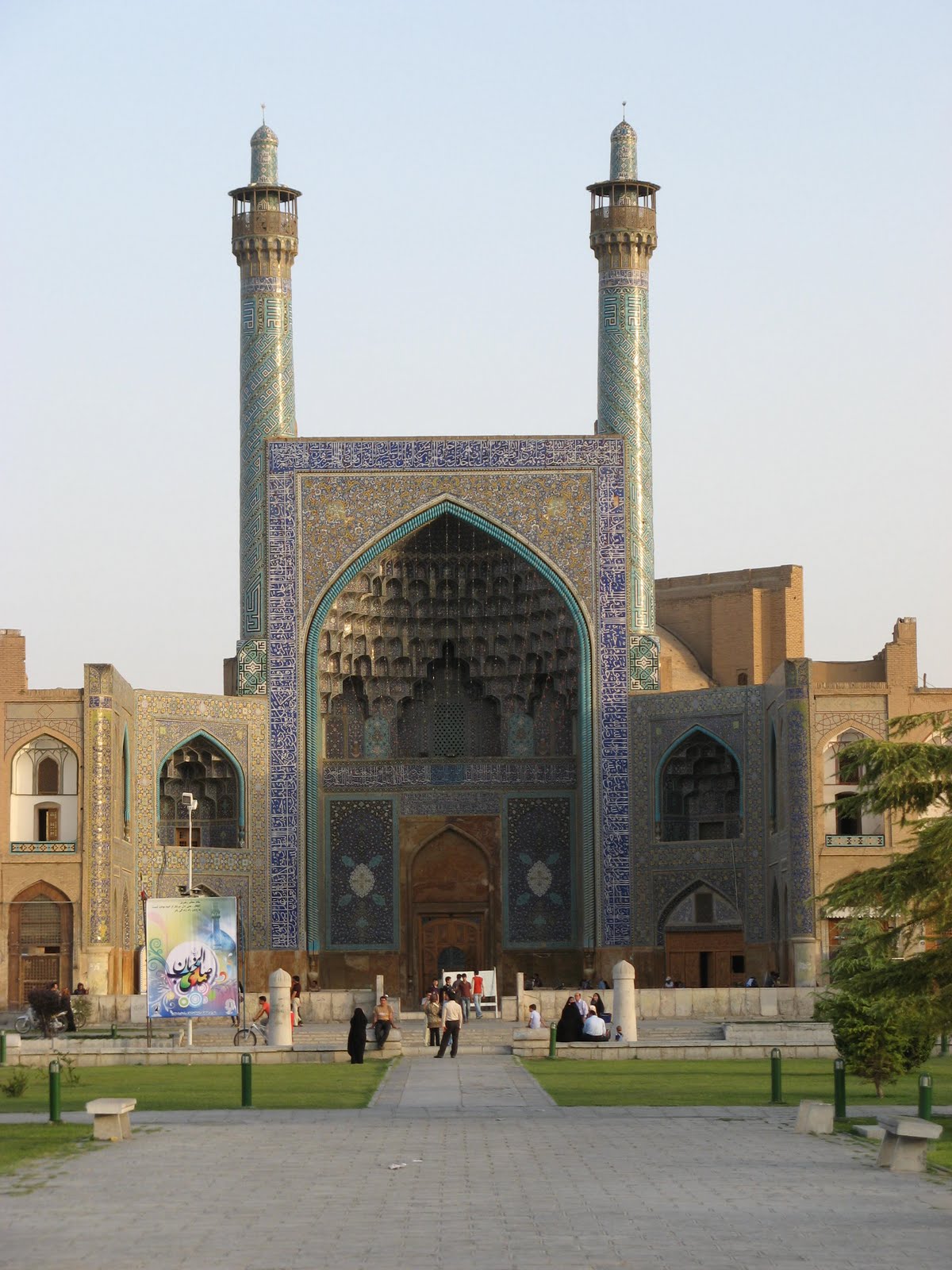
The beautiful entrance to the Imam Mosque lit up at night.


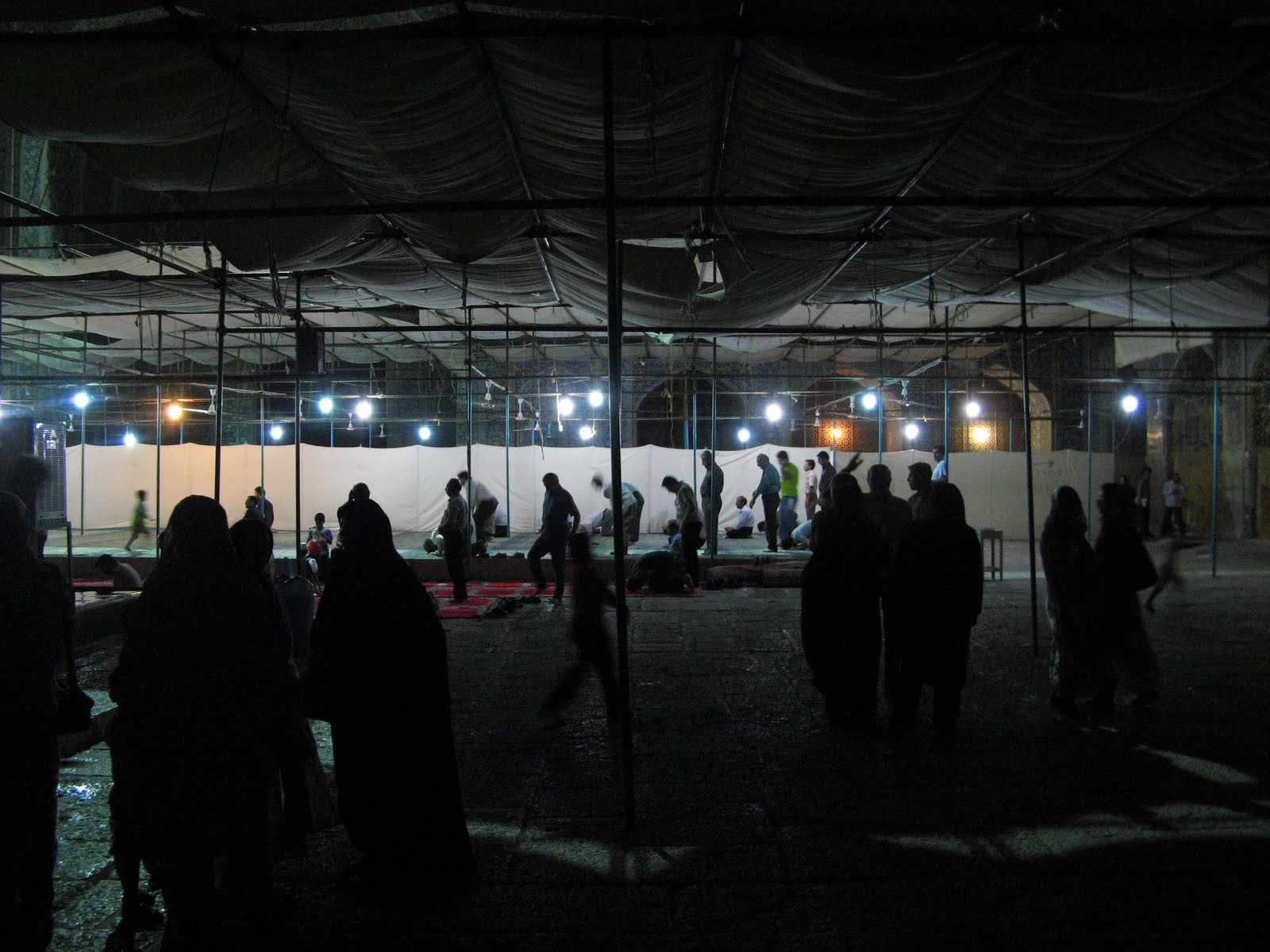
People praying inside the Imam Mosque.

Ruth and Hannah had to wear these chadors to go in.

Imam Mosque at night.


Half the World

Iran is amazing! I am really behind on writing the blog. We have been to so many beautiful and fascinating places and met so many beautiful and fascinating people I’ve got a lot of catching up to do. In Iran it is hard to get any time to yourself. Everybody is interested to meet you. People stop us in the street and question us all the time about our lives, where we come from, what we do, our families. It seems rather nosy and can get pretty annoying after a while. But Its lovely really because they are just fascinated to se a foreigner in their land.
In summary we have climed some high mountains to get to some amazing old castles and fortresses. We have seen the tomb of Sheyk Safi Od-Din and Esmail I. I was interviewed briefly on the early evening news. We met a lovely family and were invited into their home. We ended up spending a few days with them and went for a picnic/barbeque in the mountains. We went along the densely forested Caspian coast and stayed in the bizarre village of Masooleh. We travelled across the Alborz Mountains and the plains to the ancient city of Ecbatana; capital of the ancient Median Empire. We saw rock inscriptions by Kings Cyrus and Darius from 600 BC. We saw the tomb of Esther and Mordecai. We went to the ancient land of Elam and the city of Susa to see the tomb of the prophet Daniel and an ancient Elamite Ziggurat pyramid. Then we came to Esfahan. Half the world.

24.7.10

Esfahan is a wonderful city


When the sun came up we were back on the north-eastern side of the Zagros Mountains. In the area around Esfahan there is quite alot of agriculture and villages in the flat valleys in between the rugged arid mountains.

We arrived in Esfahan after about 12 hour on the bus. We eventually found a hotel that was cheap enough and good enough. After a few hours rest we set out from the hotel to find a laundry. I had been hand washing but for some reason Ruth insisted on finding a laundry. We trapsed about for hours looking for one. Eventually we found one and left our clothes in.

Then we went for a walk. We found the Hasht Behesht Palace. Hasht Behesht means eight heavens. The palace is located in the centre of the Garden of Nightingales. Nightingales appear over and over again in Iranian poetry. The palace and gardens, like the rest of Esfahan, date from the Safavid Era (1500s-1700s). At that time Esfahan was the luxurious capital. The architechture and planning of the city are testimony to the wonderful creativity and splendour of that era.


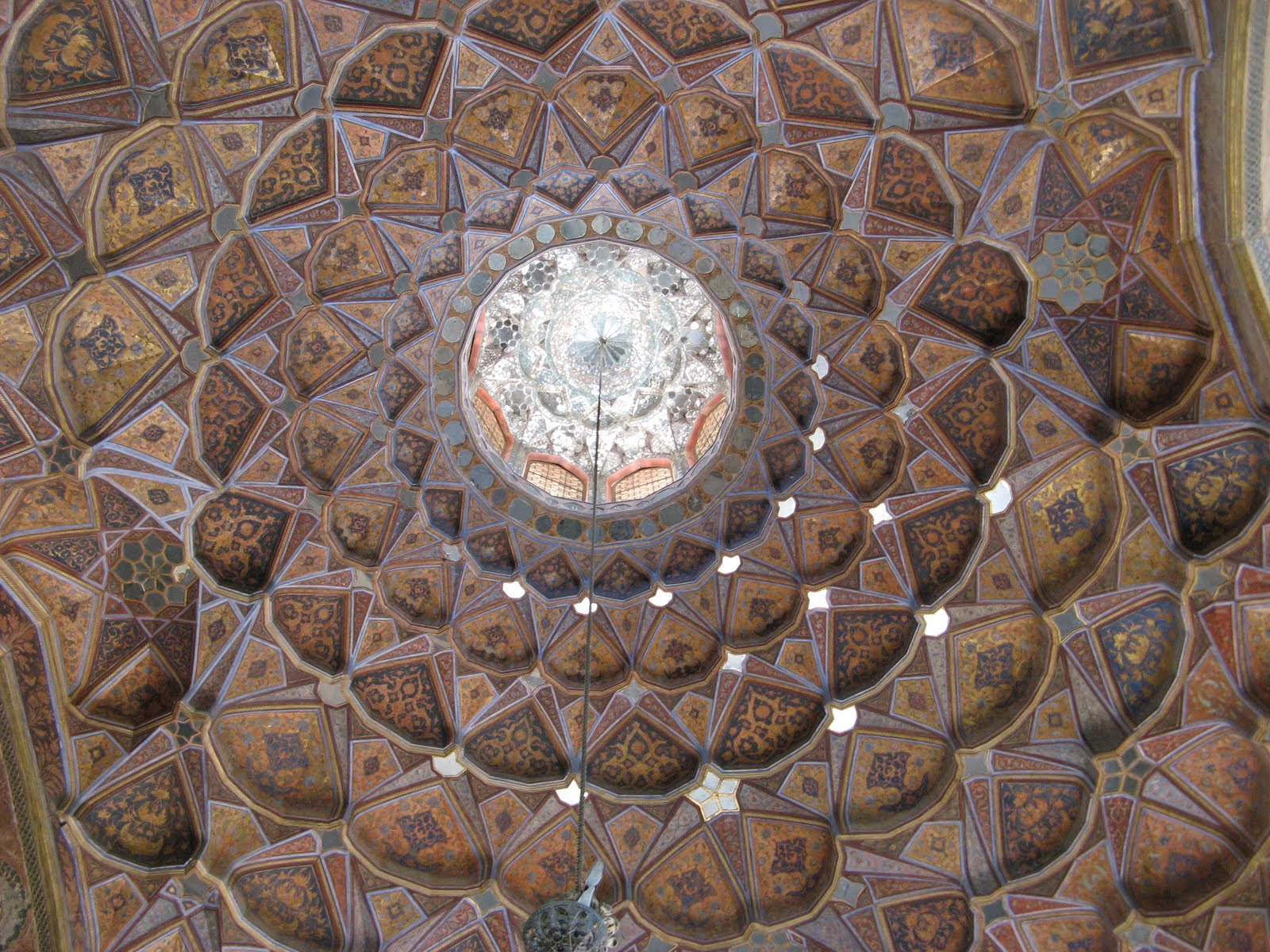
The stalactitic domed ceiling inside Hasht Behesht Palace.


Mirrored dome.


Part of a frescoed archway preserved.


Beautiful geometric and floral frescoed interiors.

We hung-out in the park for a bit and wandered a bit further. Esfahan is a beautiful and relaxing city. It has a civilised laid back atmosphere that makes it so easy to just relax and enjoy the place. Everywhere are examples of Persian Gardens. Shaded by trees these are traditional gardens with a fountain at the centre. The fountain typically has four artificial streams which flow out from it into the garden to the north, south, east and west. Sounds a bit like the description of Eden in Genesis.


We wandered through the gardens until we arrived at the Chehel Sotun Palace. Another Safavid palace of luxury.


Hannah approaches the Chehel Sotun Palace.


Looking up at the vast high ceiling of the pavillion.


A beast decorates or protects the base of a pillar.


The great mirrored Iwan.


The mirrored ceiling of the pavillion. It was huge - can you see my reflection in it?


Inside the palace was decorated with beautiful frescoes of battles involving cavalry on horses and ...elephants!


Detail of a decorative door.

On the way out we found a nice little teahouse.


Inside an Iranian Teahouse.

Then we went into the centre of town where there is a huge and beautiful square called the Naghsh-i Jahan Square.


Children playing in the fountain.


The porchway of the Imam Mosque at the southern end of the square.


The Sheyk Lotfolla Mosque at the eastern side of the Naghsh-i Jahan square.


See the horse and cart roasting around the square; the Imam Mosque and Zagros Mountains in the background.


People entering the Imam Mosque at prayer time.


The fountains and in the background the pavillion where Shah Abbas the Great King of Persia would address the crowds.


The fountains.


All around the square there is avast and wonderful bazar. It is a great place to buy gifts and handicrafts.


Families with their kids chill out in the square until late at night having picnics and relaxing. Its a great place!